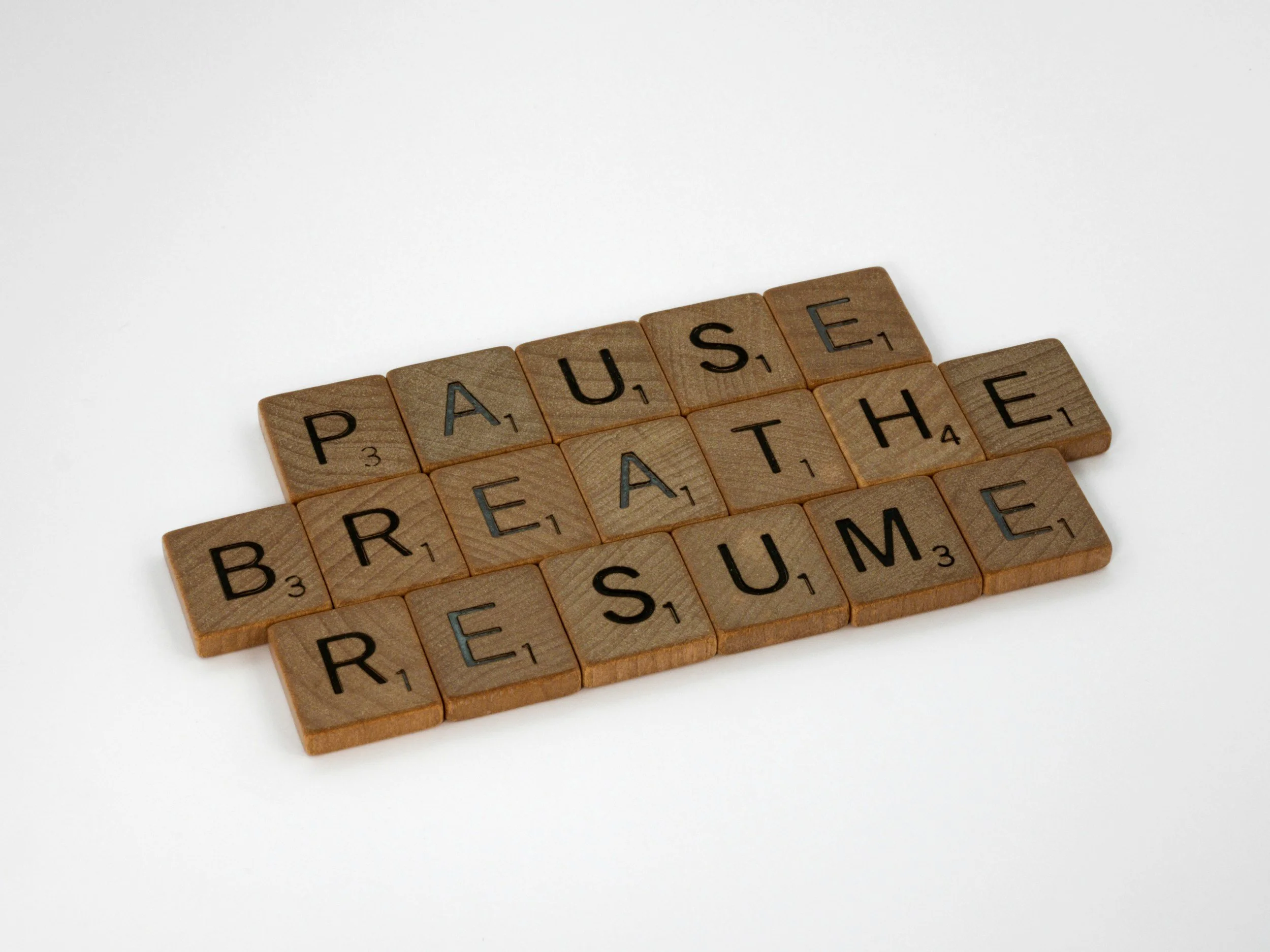
Intentional pauses
Once I became more familiar with the fact that I am not my thoughts, I started pausing more before I responded to situations. I wanted to respond from a place of wholeness, not a place of reactivity in my everyday life. For example, if a patient is coming in complaining that their glasses are not working for them, and are giving them headaches, I might first feel guilt, shame, disappointment, but if I can look from a wider perspective, I see a patient who is struggling and just wants help. I can then approach the patient from an inquisitive perspective, ask helpful questions to pinpoint where the problem is. I don’t need to carry those negative feelings with me, I can stop them in their tracks, address the problem at hand, and accept that these things do happen and that is okay. This way of thinking did not happen overnight, and there maybe more stressful situations that will be harder to pause and create the big picture perspective but when I made this change, it gave me more calm and peace. I carried less things home with me after work, and I rarely regret anything that I say because I have said them with a calm and open heart.
Another way that I have created more intentional pauses in my everyday life is meditation. There is so much I want to (and will) say about meditation because it has changed my life. I used to wake up in the morning at 8:15 am and be out the door by 8:45 am doing only the essential things needed to get ready for the day. I can say this makes it much harder to be present. We are energetic being and the transition between being asleep and supine for 8 hours and being awake and operating “on all cylinders” can be quite a jolt to the nervous system. We also spend a lot of time sitting in an exam chair and using our minds, problem solving all day long, no wonder we get stuck in our heads! My morning meditation is a hodgepodge of things that I have learned in my yoga and breath work practice. If I had to make a recommendation for someone who does not have one, I would recommend the following : start with taking a deep breath in through your nose and audibly exhale all of your air, and repeat this two more times. This helps release anything that needs to come out. Then I would do a few sun salutations, these are yoga poses that are great for “waking up the body” (you can YouTube videos on how to do sun salutations). Then I would sit on a rug or yoga mat and feel my sit bones make good contact with the ground. I would then close my eyes, and do some box breaths, (Inhale for 4 seconds, pause 4 seconds, exhale for 4 seconds, pause 4 seconds and repeat) for about 3 minutes. After that I would return to normal breathing and try to be still. Again there is a lot more that I would like to share but this is brief example.
I am able to feel connected to my inner goodness, wholeness and then recall this feeling throughout the day to remind myself to take the intentional pauses during my busy work day.
I hope this was helpful, I look forward to diving into all of the individual mediation practices that I have done to give more examples of how to practice. With love and gratitude, Amy

MY JOURNEY INTO SPIRITUALITY
I grew up catholic and I while I believe that it helped me through some difficult times in my early life, I found myself drifting further and further away from the church doctrines in my late 20’s. I believe I was spiritually depleted or lost for many years until I happened across Oprah Winfrey and Eckhart Tolle’s podcast named after his book “A New Earth”. I remember a profound statement that Eckhart made was along the lines of “You are not your thoughts, and if you are not your thoughts then who are you?” It was such a strange concept to me at the time, what do you mean I am not my thoughts? Of course I am! was my first reaction. After listening to more of the podcast, I started to realize, OMG, I am NOT my thoughts, I am the consciousness beyond and behind my thoughts. Now I realize this is a strange concept for people to understand if you haven’t heard it before, so I will try my best to break it down. We have learned about our ego in psychology, it is ours sense of self, we develop it between the ages of 2-4, it helped us understand that we are individuals and separate from the rest of the world. The ego further develops as we learn our likes and dislikes and it helps us with self-preservation. The ego is made of thought, things that we have learned along with way, i.e. I am tall, I am smart, I like the color blue etc… when painful things happen to us, the ego learns, don’t touch the hot stove, don’t provoke bees, you get the idea. The ego also creates a lot of suffering when we over-identify with it. This person yelled at me, that person hurt me, I am not enough, I am lazy, etc. What if those things weren’t true? What if they were just stories that you told yourself so much that you believed it to be the truth? One question to ask yourself would be, if you are your thoughts? then what are you in the pauses between your thoughts? Do you cease to exist in those moments? Of course not, so you must be more than your thoughts. What if you were the observer of your thoughts? What if your spirit, your core was eternal, expansive? What if you are consciousness experiencing life though a person named “fill in the blank?” This was quite a head trip for me, and it took me a long time to understand this concept but when I did, it was so freeing. When I am “Amy” I feel the pressure of society, expectations, obligations, disappointments, resentments, but when I am the person witnessing Amy, I am free I am happy and I am whole.
If this sparks something within you, I would encourage you to explore this some more. Here are some resources that I have found helpful early on this path.
Books: Eckhart Tolle-The Power of Now, Thich Nhat Hanh - Being Peace, Mindfulness , Ajahn Brahm- Bliss & Beyond
Audiobook: Ram Dass - Be Here Now, and Polishing the Mirror, Becoming Nobody.
Youtube Channels: Simply Always Awake by Angelo Dilulo
Podcasts: Tara Brach Podcast